
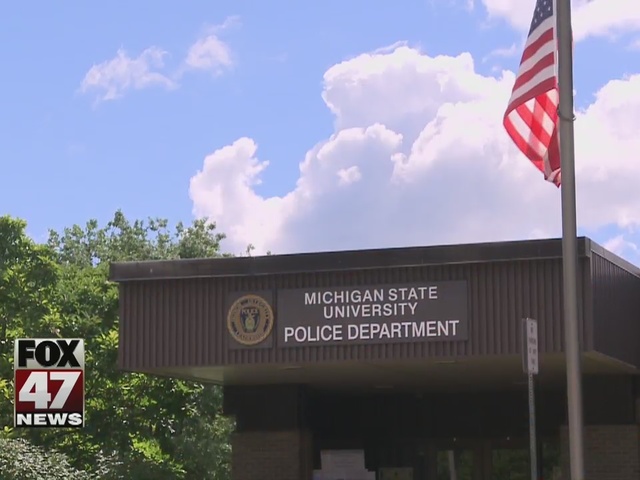


The Michigan State Police say their first priority when it comes to enforcing the university's new ordinance banning all tobacco from the campus is teaching people about the new rules, not punishing the people who break them.
Students say they and their peers know that MSU became tobacco free this August, but said it's going to be a difficult task convincing the university's thousands of visitors to obey the new ordinance.
"During tailgates and stuff people smoke and drink all the time," MSU freshman Aditya Tiwari said, or at least that's what he's heard, since he's never actually been to a tailgate yet.
"You can't really stop that many people from doing it, so I mean they're going to try their best obviously," Mason Cieri, also a freshman at Michigan State, said.
"That's gonna be super tough because adults, people that have been smoking their whole lives, alums, they're not going to be very happy when they come back here and aren't allowed to smoke," Sophomore Jack Percy said.
Stopping everyone from using tobacco on Michigan State's campus may sound like a daunting task, but MSU Police Captain Doug Monette says he's not intimidated.
"There is an ordinance, but we are going to try to take the approach of education," Monette said. "Our officers will use discretion and common sense just like they do with other ordinances and state laws, but one of the big things that we want to get out is to educate the public that Michigan State University is tobacco free."
Monette says since education is so important, the entire university will be working together on this, and MSU police won't be the only ones telling people not to use tobacco on campus.
"It's a cultural shift. It's not just the police department, it'll be the athletic department, it's everyone on campus. It's a process that we're all part of," he said.
That change isn't going to happen overnight, so the department will probably hold off on intense enforcement and punishment to start, but, Monette says, that change can and will happen.
"This is part of what we do. Things change and we need to transform with it and that's something that we can do, " he said.
