



A French woman and an American tested positive for the hantavirus, as nations around the world scrambled Monday to repatriate passengers from a cruise ship hit by a deadly outbreak and quarantine or isolate them.
One Spanish national provisionally tested positive for hantavirus on Monday, health authorities in Spain said. The patient displayed no symptoms and the government was working to confirm the test results.
Passengers from the ship began flying home aboard military and government planes Sunday after the MV Hondius anchored in the Canary Islands. Personnel in full-body protective gear and breathing masks escorted the travelers from ship to shore in Tenerife, an effort that was continuing Monday.
It is the first-ever case of a hantavirus outbreak on a cruise ship, according to Maria Van Kerkhove, WHO’s director of epidemic and pandemic preparedness. So far three cruise ship passengers have died, but health authorities continue to stress that the risk to the broader public is low.
RELATED STORY | What to know about hantavirus after cruise ship quarantine
The French woman tested positive for hantavirus and her health worsened in the hospital overnight, French Health Minister Stephanie Rist said Monday. The woman was among five French passengers repatriated on Sunday. She developed symptoms on the flight to Paris, Rist told public broadcaster France-Inter.
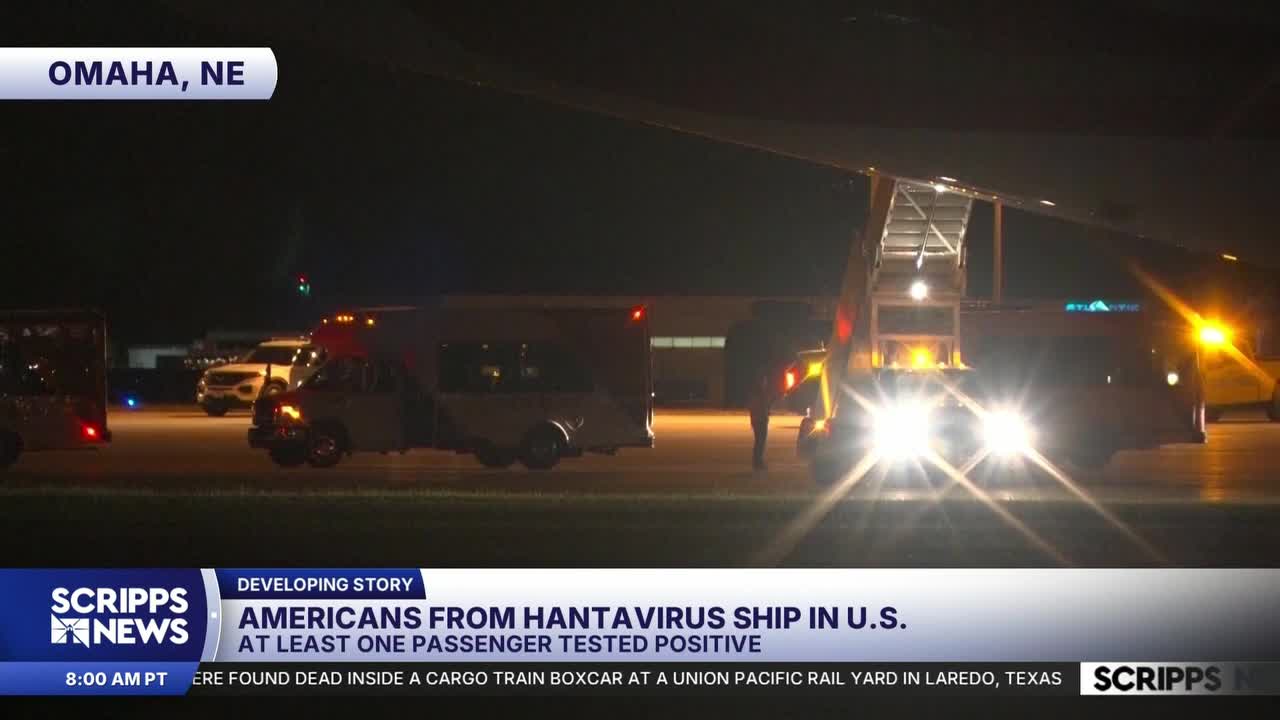
One of 17 American passengers evacuated from the ship and flown to Nebraska also tested positive for the hantavirus but is not showing any symptoms, and another had mild symptoms, U.S. health officials said late Sunday. The flight landed in the early hours of Monday morning and passengers were transferred to awaiting buses and driven away from the airport.
The Americans would first be taken to the University of Nebraska Medical Center, which has a federally funded quarantine facility, to assess whether they have been in close contact with any symptomatic people and their risk levels for spreading the virus.
“One passenger will be transported to the Nebraska Biocontainment Unit upon arrival, while other passengers will go to the National Quarantine Unit for assessment and monitoring. The passenger who is going to the Biocontainment Unit tested positive for the virus but does not have symptoms,” said Kayla Thomas, a spokesperson for the Nebraska Medicine network that will help care for the passengers.
The university medical center also has a special unit for treating people with highly infectious diseases that was used early in the pandemic for COVID-19 patients and previously for Ebola patients.
The WHO recommended close monitoring of the former passengers, and many countries quarantined them.
RELATED STORY | CDC sidelines itself as hantavirus cruise ship outbreak grabs global attention
Earlier, officials from the Spanish Health Ministry, the World Health Organization and the cruise company Oceanwide Expeditions had said none of the more than 140 people who were then on the Hondius had shown symptoms of the virus.
All of the passengers were escorted Sunday from the ship to shore by personnel in full-body protective gear and breathing masks. The planes arriving in Tenerife were to fly out passengers from more than 20 countries in an evacuation effort that was running into Monday.
Three people have died since the outbreak began, and five people who left the ship earlier were infected.
Health officials say risk to public is low
Hantavirus usually spreads from rodent droppings and is not easily transmitted between people. But the Andes virus detected in the cruise ship outbreak may be able to spread between people in rare cases. Symptoms — which can include fever, chills and muscle aches — usually show between one and eight weeks after exposure.
WHO Director-General Tedros Adhanom Ghebreyesus said Sunday that the general public should not be worried about the outbreak. “This is not another COVID. And the risk to the public is low. So they shouldn’t be scared, and they shouldn’t panic.”
WHO is recommending that passengers’ home countries “have active monitoring and follow-up, which means daily health checks, either at home or in a specialized facility,” said Kerkhove, the organization’s top epidemiologist.
Numerous countries have said their people will be quarantined or hospitalized for observation.
Australia is sending a plane, expected to arrive Monday, to evacuate its people and those from nearby countries, such as New Zealand, and unspecified Asian countries, said Spanish Health Minister Mónica García, who added that the evacuation flight was expected to be the last to leave Tenerife.
Dutch Foreign Minister Tom Berendsen said a second Dutch flight Monday would bring back more passengers from the Netherlands and other nations.
Berendsen said the evacuation operation "is based on concern for the passengers. But also concern for public health, and we try to do that in the best way.”
